
The latest financial reports show that Africa FDI 2025 hit a big milestone of $70 billion. This number looks good, but it tells a more detailed story. Not every country got the same benefits from these big investments.
It’s important to know the difference between countries getting one big deal and those building a strong economy. True growth comes from how these investments help local businesses and people in the long run.
In this article, we look at which areas really did well and which sectors got the most attention. We’ll see how African foreign direct investment affects workers, small businesses, and communities. By looking beyond just the numbers, we can understand the real effects of these investments.
Key Takeaways
- The $70 billion investment figure shows a big change in global market interest.
- Big deals don’t always mean good economic growth for everyone.
- Important sectors like tech and green energy are leading the way in growth.
- Creating jobs for locals is key to measuring lasting success.
- Smart policies are needed to turn investments into real benefits for communities.
What the $70 Billion Africa FDI 2025 Figure Really Measures
When we see a headline claiming $70 billion in investment, it’s key to understand what it really means. This figure is a big deal, but FDI inflows Africa data can be misleading. It shows how capital flows into the market, but not always how it’s used.
How the 2025 total compares with recent African investment trends
The 2025 total shows a shift in global capital allocation from the past five years. Africa investment trends have changed, with investors focusing on stable sectors over quick profits.
The difference between announced projects, committed capital, and realized FDI
It’s important to know the difference between promises and actual spending. An announced project is just a plan. Committed capital is a signed deal. But realized FDI is the only true measure of money spent and jobs created.
Why headline totals can overstate the benefits reaching local economies
Headline numbers can be misleading. They often include financial flows that don’t directly help local economies. Large sums may just pass through without touching the real economy. Analysts look deeper to see if Africa investment trends really help development.
Reinvested earnings, intra-company transfers, and special-purpose financing
Most of the reported FDI inflows Africa total is from technical accounting, not new cash. Reinvested earnings count as new investment, even if the money stays within the company. Intra-company transfers and special-purpose financing also inflate the total, making the real impact seem bigger than it is.
Which African Countries Captured the Largest Share of Investment?
The $70 billion in 2025 shows a clear top tier in Africa for investors. It’s important to look at foreign investment in Africa in different ways. Some focus on big deals, while others look at steady projects.
This approach can change country FDI rankings a lot. A big project can make a country seem more attractive for a short time.
Egypt’s lead in large-scale energy, infrastructure, and industrial projects
Egypt leads by getting big money for large-scale energy and infrastructure. The government is focusing on industrial zones and renewable energy. These big projects can make Egypt’s investment totals look even higher.
South Africa’s position as a diversified regional investment hub
South Africa is a key spot for investors looking for a wide range of opportunities. It’s not just about one area, but finance, manufacturing, and services too. Its banking sector is strong, making it a good base for international companies.
Morocco’s appeal for automotive, aerospace, renewable energy, and logistics capital
Morocco is becoming a top spot for making things. It’s investing a lot in logistics and renewable energy. This makes it attractive to European supply chains. Its focus on cars and planes shows it’s planning for the future.
Nigeria’s opportunity in energy, technology, and consumer markets
Nigeria is special because of its big population and growing digital world. Energy is a big draw, but tech is also attracting a lot of money. The country’s huge market is also catching the eye of investors.
How Ethiopia, Kenya, Tanzania, and the Democratic Republic of the Congo fit into the rankings
Even if they’re not at the top, countries like Ethiopia, Kenya, Tanzania, and the Democratic Republic of the Congo are important. Country FDI rankings might miss their steady growth. Here’s a look at what they’re focusing on:
| Country | Primary Investment Driver | Market Strength |
|---|---|---|
| Ethiopia | Manufacturing & Textiles | Low-cost labor |
| Kenya | Fintech & Digital Services | Innovation hub |
| Tanzania | Mining & Infrastructure | Resource wealth |
| DRC | Critical Minerals | Global supply chain |
Investment in Africa is more than just numbers. It’s about the quality of the money and how it helps local economies grow.
Egypt’s Dominance: A Genuine FDI Win or a Statistical Outlier?
Egypt often stands out as a top choice for investors, with $70 billion in total investment. This high Egypt FDI level seems promising. But, is it a sign of strong economic health or just a few big deals?
The role of major property, infrastructure, and energy transactions
Most of Egypt’s investment goes into big projects. These African megaprojects include huge urban plans, new capitals, and energy projects. The government hopes these will modernize the economy and draw in long-term investors.
Why one exceptionally large deal can reshape Africa’s annual ranking
A single, huge deal can change Africa’s investment rankings for a year. This Egypt FDI trend shows how one big deal can overshadow other countries’ steady growth.
What Egypt’s inflows mean for jobs, foreign exchange, and domestic suppliers
Big investments aim to boost the local economy. They create many jobs and help with foreign exchange. They also give domestic suppliers new tech and management skills through partnerships.
Risks created by concentrated investment and dependence on megaprojects
But, relying too much on African megaprojects is risky. It can make the economy too dependent on a few deals. This can lead to debt if the projects don’t make money fast enough. It’s key to support smaller businesses for long-term stability.
Why Morocco and South Africa Attracted More Durable Investment
Not all money coming into a country is the same. Some is just for big projects that don’t last. But Morocco FDI and South Africa investment are different. They have steady growth because they attract long-term investments from big companies.
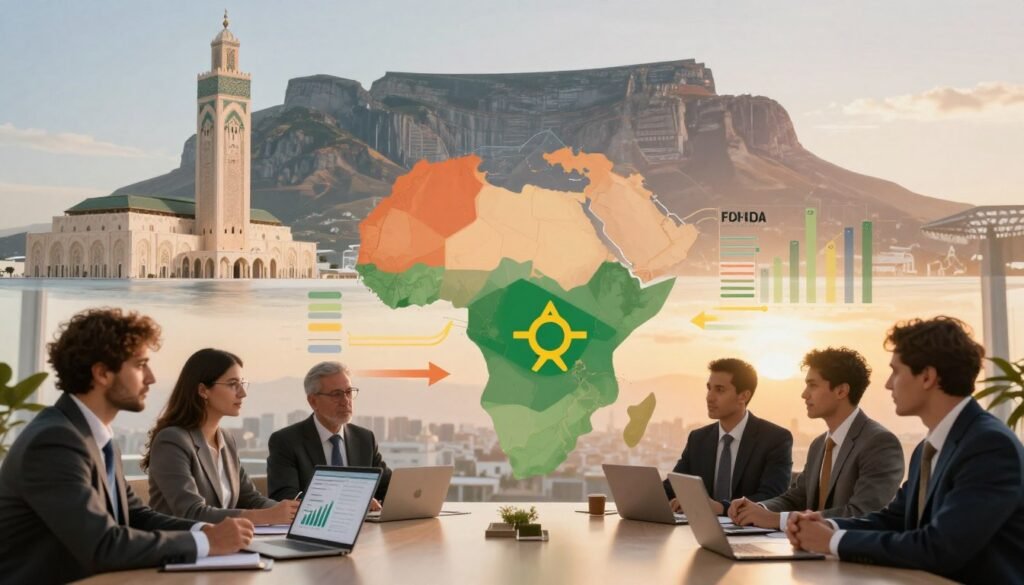
Morocco’s export platforms and proximity to European supply chains
Morocco is a key player in making goods for Europe. Its strategic location makes it perfect for car and plane parts. This close location helps companies save on shipping costs.
South Africa’s financial markets, consumer base, and industrial capabilities
South Africa is strong because of its finance sector and industry. It has a mature regulatory framework and a big, eager market. This makes it a top choice for companies wanting to grow in Africa.
How ports, roads, electricity, and special economic zones influence investor decisions
Good infrastructure is key for keeping investors. Special Economic Zones (SEZs) in both countries offer streamlined processes and tax breaks. Efficient ports and roads make it easier for businesses to invest more.
Where regulatory uncertainty, infrastructure gaps, and power shortages are challenges
Even with their strengths, investors face big challenges. Power outages and old infrastructure can raise costs. And regulatory uncertainty in some areas can make companies think twice. It shows that even the best markets need careful planning to succeed.
Energy, Minerals, and Manufacturing Drove the Biggest Capital Flows
Looking at the $70 billion in FDI, we see energy, minerals, and manufacturing leading the way. These sectors draw in global investors looking for big returns and strategic growth. By focusing on these areas, African nations are becoming key players in global supply chains.
Renewable energy and natural gas projects competing for global capital
The rise in renewable energy investment Africa is changing the continent’s energy scene. Solar, wind, and geothermal projects are getting a lot of attention from climate funds and private equity. These projects are key for powering growth and meeting global green goals.
Natural gas is also important for many countries. Investors are putting money into LNG infrastructure for both home use and exports. This helps countries balance their energy needs now and plan for cleaner energy later.
Critical minerals and the race to build African processing capacity
The demand for critical minerals Africa has never been higher. Minerals like cobalt, lithium, and copper are key for green energy, mainly in batteries. But the real value is in processing these minerals locally.
Now, governments are pushing for local processing to keep more wealth in their countries. By refining minerals locally, countries can get a bigger share of the value chain. This is crucial for turning raw resources into sustainable economic growth.
Automotive, electronics, pharmaceuticals, and other manufacturing opportunities
Manufacturing is a big part of foreign investment, with cars and drugs leading the charge. Global companies are setting up plants to serve Africa’s growing middle class. These projects bring advanced technology and management skills to the area.
Electronics and light manufacturing are also growing, thanks to low labor costs. When these industries are supported by local suppliers, they create quality jobs. This industrial growth is key for diversifying economies away from just relying on commodities.
Why resource extraction does not automatically create broad-based development
Resource extraction brings in a lot of capital, but it doesn’t always lead to widespread wealth. Without the right policies, these projects can stay isolated from the rest of the economy. Strong local-content requirements are needed to make sure local businesses and workers benefit.
Real development happens when governments negotiate for skills and infrastructure sharing. When mines or energy plants also support local schools, roads, and small businesses, the impact is lasting. Sustainable growth means these investments lead to lasting human capital and industrial capacity.
Technology and Consumer Markets Created a Different Set of Winners
A quiet revolution is changing Africa’s economy. It’s not just about big projects. Digital platforms are changing how business works across the continent. This shift is attracting new investors who want scalable solutions.
Fintech investment in Nigeria, Kenya, South Africa, and Egypt
The financial services sector is leading the tech scene in Africa. Africa fintech investment gets the most venture capital. This is because traditional banking has gaps that need to be filled.
Nigeria, Kenya, South Africa, and Egypt are the main places for these innovations. They have talent and big markets. These countries have made payments, lending, and insurance digital for millions.
They use mobile tech to create resilient financial ecosystems. These systems work without old banking. This is why American venture capital firms are interested.
Digital infrastructure, data centers, mobile services, and artificial intelligence
Africa needs strong digital infrastructure Africa for its digital boom. Hyperscale data centers and fiber-optic networks are key. They support cloud computing, mobile services, and artificial intelligence.
“The true power of Africa’s digital economy is in the data centers and connectivity. These make digital services possible for everyone.”
Fast-growing urban consumers as a draw for American and global companies
Urbanization is attracting global brands. Young, tech-savvy consumers in cities drive demand for e-commerce and digital entertainment. American companies see these cities as key markets for growth.
The table below shows the main drivers of Africa’s digital transformation:
| Sector | Primary Growth Driver | Key Markets |
|---|---|---|
| Fintech | Financial Inclusion | Nigeria, Kenya |
| Data Centers | Cloud Adoption | South Africa, Egypt |
| E-commerce | Urban Consumption | Nigeria, Morocco |
Why startup funding totals can fall even while digital adoption accelerates
Startup funding can change due to global economic conditions. Even with tighter financing, digital adoption keeps growing. Consumers are not slowing down their use of digital tools.
This gap between funding and real-world use is common in emerging markets. As digital infrastructure Africa grows, focus shifts to sustainable models. This ensures Africa fintech investment stays key to the continent’s future.
Countries That Attracted Less FDI—and Why the Gap Matters
While $70 billion in investment sounds impressive, the reality is that capital flows across Africa remain deeply uneven. This highlights a widening African investment gap that threatens to leave smaller or more fragile nations behind. Understanding this disparity is key for the long-term economic health of the continent.
How political instability and conflict redirected investment away from fragile markets
Investors seek stability and predictability. When regions face conflict or sudden political shifts, capital flees to safer havens. These FDI barriers Africa faces are not just about headlines; they represent a fundamental risk that many global firms are unwilling to take.
Without a stable environment, long-term projects cannot thrive. Investors prioritize security to protect their assets and ensure operations can continue without interruption. Nations struggling with internal strife often find themselves excluded from the global capital cycle.
The effect of currency controls, debt pressure, and weak investor protections
Financial health is another major factor in attracting foreign interest. Many countries struggle with strict currency controls that make it difficult for companies to repatriate their profits. When combined with high debt levels, these policies create a climate of uncertainty that discourages investors.
“Investment follows the path of least resistance, where clear rules and reliable institutions provide the foundation for growth.” — Anonymous Economist
Weak legal frameworks also play a significant role in widening the African investment gap. If an investor cannot trust that their contracts will be upheld or that their property rights are secure, they will simply look elsewhere. Strengthening these protections is a vital step toward creating a more inclusive economic landscape.
Why landlocked countries face higher logistics and market-access costs
Geography often dictates economic opportunity, and landlocked nations face significant challenges. These countries face higher costs for importing raw materials and exporting finished goods. The reliance on neighboring countries for port access adds layers of complexity and expense that coastal nations do not face.
These logistical hurdles act as natural FDI barriers Africa must address through better regional cooperation. Without efficient transit corridors, these economies struggle to compete on price and speed. Improving infrastructure is not just a local concern; it is a regional necessity for balanced growth.
What smaller economies can do to compete without relying on giant one-off deals
Smaller nations do not need to chase massive, headline-grabbing megaprojects to succeed. Instead, they can focus on creating a transparent and business-friendly environment that attracts smaller, more sustainable investments. By simplifying regulations and digitizing government services, they can lower the barrier to entry for international firms.
Regional integration is another powerful tool for smaller markets. By joining larger trade blocs, these countries can offer investors access to a broader consumer base. This strategy helps them move beyond the limitations of their own borders and participate more fully in the global economy.
Did the Investment Reach Workers, Businesses, and Local Communities?
Understanding the impact of global investment is more than just tracking money. The $70 billion figure gets a lot of attention. But the real impact is seen in the factories, offices, and neighborhoods where this money goes.
We need to look beyond the numbers to see if these investments truly help people. This means checking if they improve the lives of everyday people.
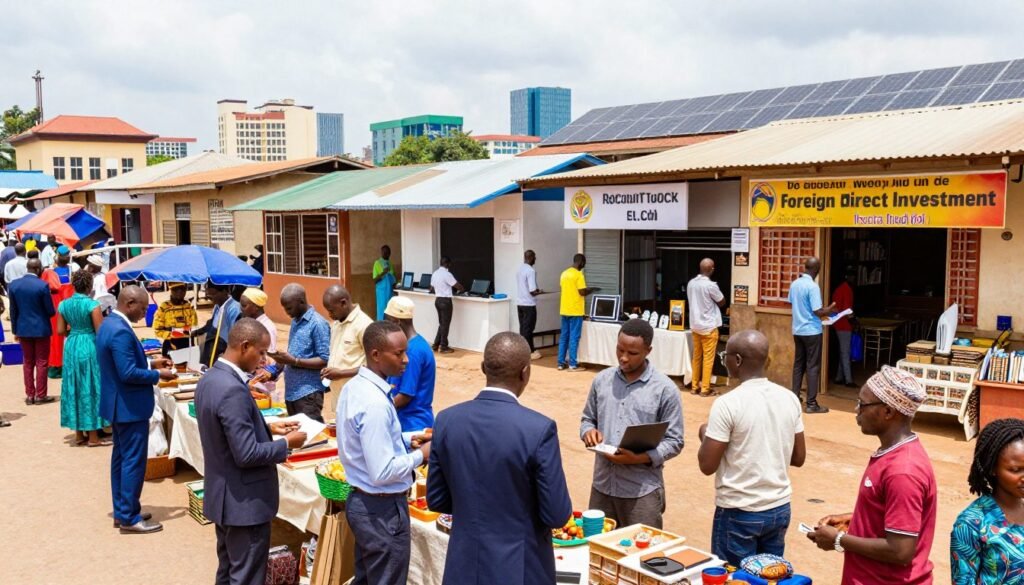
Measuring FDI through employment, wages, tax revenue, and supplier development
Success isn’t just about the money. It’s about creating sustainable jobs and paying fair wages. This helps families out of poverty.
Good projects also help the government through taxes. This money funds important public services.
When a foreign company buys from local businesses, it boosts the whole area. This creates a multiplier effect that strengthens the regional economy.
Whether African firms gained technology, management expertise, and export access
The best investments share knowledge. African companies get access to cutting-edge technology and modern management. This makes them more competitive globally.
By working with international investors, local businesses can reach new markets. They can sell to customers in the United States, Europe, and Asia. This helps them join global value chains.
How governments can negotiate stronger local-content and skills-transfer requirements
Governments are key in making sure foreign money helps the community. They can set local-content policies that require hiring and training local workers. This ensures the workforce gains valuable skills.
Setting these rules is a delicate task. If they’re too strict, they might scare off good investors. But done right, they create a win-win scenario. Companies get a loyal, skilled workforce, and the host country builds industrial capacity.
What the 2025 results mean for American investors, exporters, and policymakers
The 2025 data shows a shift towards more collaborative investment models. U.S. companies that focus on local economic development do better in Africa. Building strong community ties leads to better risk management and brand loyalty.
Policymakers should support initiatives that promote skills-transfer and infrastructure growth. This ensures American interests align with African goals. It leads to lasting prosperity for both sides.
Conclusion
The 70 billion dollar figure for 2025 is a key starting point for understanding capital movement in Africa. This number highlights big infrastructure deals. But it also hides the real impact of money on local lives.
True prosperity comes from finding projects that truly benefit workers and businesses. It’s not just about the big numbers.
Egypt is a top choice for capital, thanks to its big energy and property sectors. Morocco and South Africa offer stable environments for manufacturing and finance. These markets show that success often comes from diverse sectors, not just big deals.
American investors in Africa should focus on stable markets to reduce risk and grow. Smart investment supports Africa’s economic growth by boosting technology and creating jobs. Policymakers must ensure trade agreements promote fair partnerships and sustainable growth.
The future requires looking beyond just the amount of money spent. By aligning corporate goals with local needs, global firms can tap into Africa’s vast opportunities. This way, the next wave of investment can build a strong foundation for success and stability for all.