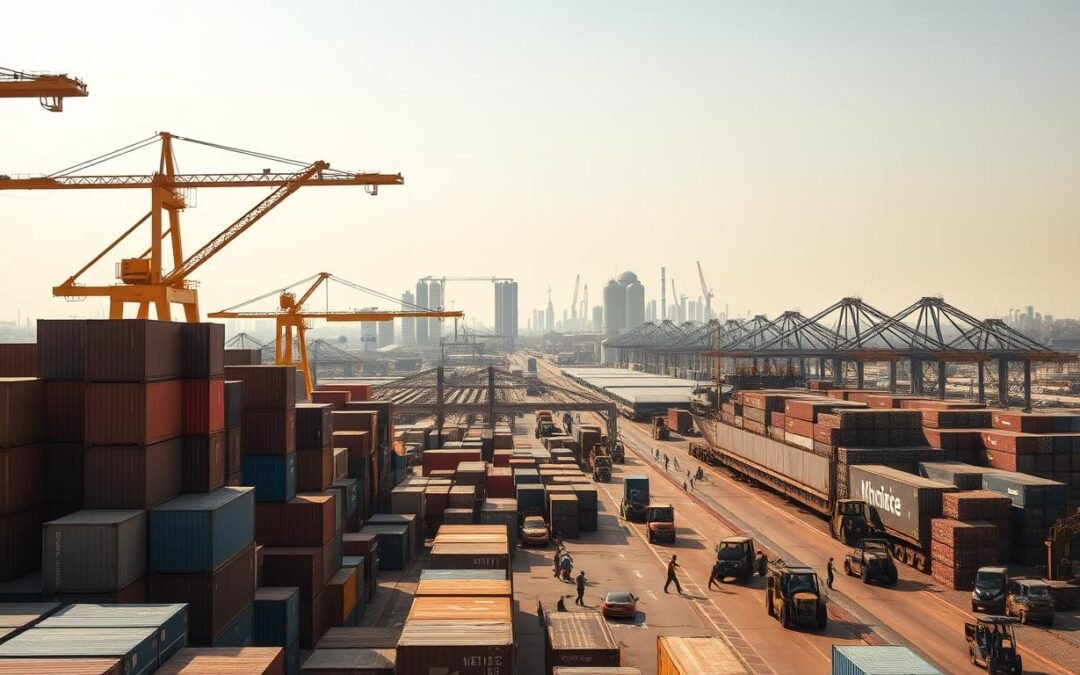
Guinea is determined to maximize its economic benefits from the Simandou iron ore project, particularly by maintaining control over its critical infrastructure. The country’s strategy focuses on capturing revenue through port tariffs and creating jobs along the logistics value chain.
By not sharing its “Golden Corridor” with neighboring Liberia, Guinea aims to stimulate its local economy and enhance its logistics capabilities. This approach is expected to have a positive impact on the country’s economic development, making the most of its natural resources.
Key Takeaways
- Guinea seeks to maximize revenue from the Simandou project.
- Control over infrastructure is crucial for capturing economic benefits.
- Port tariffs and logistics services are key to Guinea’s strategy.
- Job creation is a significant aspect of the project’s economic impact.
- Guinea’s approach aims to stimulate local economic development.
Guinea’s Simandou Iron Ore Project: A National Treasure
As the world’s largest untapped iron ore reserve, the Simandou project is a treasure trove for Guinea’s economic future. The project’s significance cannot be overstated, with its potential to transform Guinea’s economy through job creation and infrastructure development.
The World’s Largest Untapped Iron Ore Reserve
The Simandou iron ore project boasts an estimated 2.4 billion tonnes of high-grade iron ore, making it the largest untapped reserve globally. This vast resource has the potential to catapult Guinea into a leading position in the global iron ore market.
Historical Context of Simandou Development
The Simandou project has a complex history, with development beginning in the early 2000s. Despite facing numerous challenges, including
“delays and changes in ownership”
, the project is now poised for completion, promising significant economic benefits for Guinea.
The Integrated Infrastructure Strategy
With its vast iron ore reserves, Guinea is implementing an integrated infrastructure strategy to maximize the potential of the Simandou project. This approach is crucial for the efficient transportation of iron ore and contributes significantly to Guinea’s logistics value chain.
The Trans-Guinean Railway System
A key component of this strategy is the development of the Trans-Guinean Railway System, designed to transport iron ore from the Simandou mines to the coast. This railway will not only facilitate the export of iron ore but also provide a vital transportation link for other industries, enhancing the overall connectivity within the country.
The railway system is expected to create numerous job opportunities, both during its construction and operational phases, thereby contributing to the local economy. Moreover, it will enable the transportation of other goods, potentially stimulating economic growth in various sectors.
Deep-Water Port Development Plans
Another critical aspect of the infrastructure strategy is the development of a deep-water port. This port will be capable of handling large volumes of iron ore, significantly reducing transportation costs and increasing the competitiveness of Guinea’s iron ore in the global market.
The deep-water port is also anticipated to generate substantial revenue through port tariffs, contributing to the country’s economy. Furthermore, the port’s development will create Simandou deep-water port jobs, both directly and indirectly, in areas such as logistics, maintenance, and other supporting services.
| Infrastructure Component | Economic Benefits | Job Creation Potential |
|---|---|---|
| Trans-Guinean Railway System | Enhanced connectivity, stimulation of other industries | Construction and operational jobs |
| Deep-Water Port | Revenue through port tariffs, increased competitiveness | Direct and indirect jobs in logistics and maintenance |
Revenue Capture: Guinea’s Financial Stake
The Simandou project represents a monumental opportunity for Guinea to capture substantial revenue through strategic infrastructure development. This revenue will be crucial for Guinea’s economic development, enabling the country to diversify its economy and reduce dependence on external financial sources.
Port Fees and Maritime Revenue Streams
Guinea plans to generate significant revenue from port fees associated with the Simandou project. The deep-water port to be constructed as part of the project will handle large volumes of iron ore, attracting substantial port fees. Additionally, maritime revenue streams will be generated from shipping activities, further enhancing Guinea’s financial stake in the project.
Rail Tariffs as Long-term Income
The Trans-Guinean Railway System, a critical component of the Simandou infrastructure, will provide a long-term income stream through rail tariffs. These tariffs will be levied on the iron ore transported from the mines to the port, ensuring a steady flow of revenue for Guinea.
Associated Logistics Services
Beyond port fees and rail tariffs, Guinea will also benefit from associated logistics services. These services, including maintenance, transportation, and handling of iron ore, will create additional revenue streams, further bolstering Guinea’s financial position.
| Revenue Stream | Description | Projected Revenue |
|---|---|---|
| Port Fees | Fees generated from handling iron ore at the deep-water port | $50 million annually |
| Rail Tariffs | Tariffs levied on iron ore transported via the Trans-Guinean Railway | $100 million annually |
| Logistics Services | Revenue from maintenance, transportation, and handling services | $30 million annually |
Simandou Deep-Water Port Jobs: Economic Transformation
The Simandou deep-water port project is poised to revolutionize Guinea’s economy through significant job creation. This transformation will not only boost the local economy but also contribute to the country’s overall economic development.
The development of the Simandou deep-water port will generate numerous employment opportunities, both directly and indirectly. Direct employment will be created in various sectors related to the port’s operation and management.
Direct Employment Opportunities
Direct employment opportunities will arise in several areas, including port operations, maintenance, and administrative roles. The port will require a substantial workforce to manage its day-to-day activities, ensuring a significant number of jobs for the local population.
- Port operations staff
- Maintenance personnel
- Administrative and managerial staff
- Security personnel
These roles will not only provide employment but also contribute to the development of a skilled workforce in Guinea.
Indirect Job Creation in Supporting Industries
In addition to direct employment, the Simandou deep-water port will stimulate the growth of supporting industries, leading to indirect job creation. Services such as logistics, transportation, and hospitality will experience a surge in demand, creating new employment opportunities.
| Industry | Potential Jobs |
|---|---|
| Logistics | Warehouse staff, delivery drivers |
| Transportation | Drivers, mechanics |
| Hospitality | Hotel staff, restaurant workers |
The growth of these supporting industries will further enhance the local economy, creating a positive ripple effect beyond the port itself.
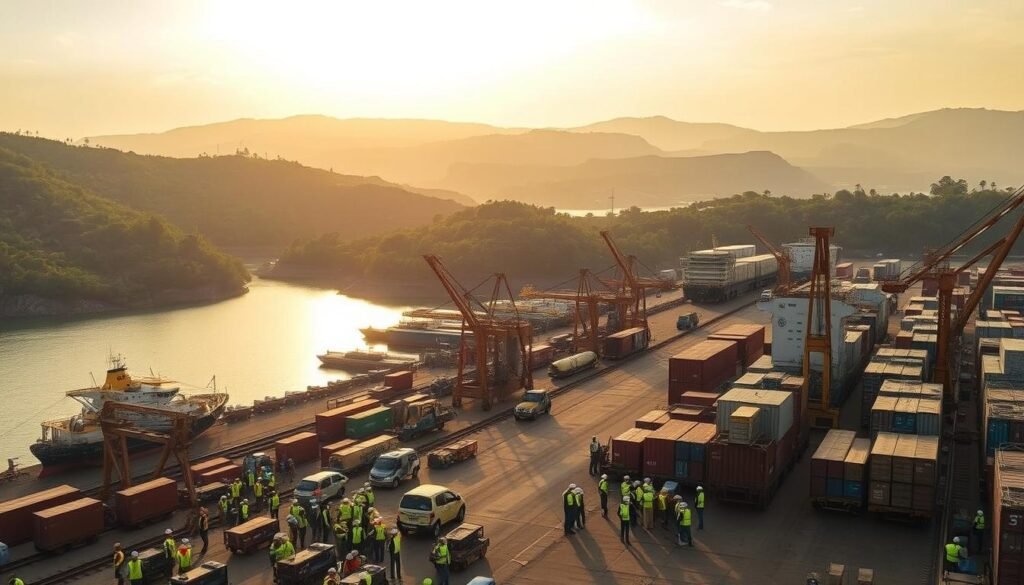
The Simandou deep-water port project is a game-changer for Guinea’s economy, offering substantial employment opportunities and stimulating economic growth. As the project progresses, its impact on the local economy will become increasingly evident.
Local Economic Development Beyond Mining
Beyond the extraction of iron ore, the Simandou project holds the key to Guinea’s broader economic development. The infrastructure developed for this massive undertaking is expected to have far-reaching benefits for local communities, extending well beyond the mining sector.
Infrastructure Benefits for Communities
The Trans-Guinean Railway and deep-water port facilities will not only facilitate the transportation of iron ore but also provide improved infrastructure for local communities. This includes:
- Enhanced connectivity through the railway system, allowing for easier access to markets and services.
- Potential for increased trade through the deep-water port, benefiting local businesses and stimulating economic growth.
Skills Development and Technology Transfer
The Simandou project is also expected to drive skills development and technology transfer in Guinea. As the project progresses, locals will have the opportunity to acquire new skills through training programs, enhancing Guinea’s capacity beyond the mining sector. Key areas of focus include:
- Technical training for railway and port operations.
- Logistics and management skills development.
By investing in skills development and infrastructure, the Simandou project is poised to make a lasting impact on Guinea’s economy, fostering growth and development that extends far beyond the mining industry.
Value Addition Strategy: Beyond Raw Ore Exports
Guinea is poised to revolutionize its iron ore industry by implementing a comprehensive value addition strategy. This approach aims to maximize the economic benefits derived from the Simandou iron ore project by processing the ore into higher-value products.
The guinean value addition strategy focuses on developing downstream industries to increase revenue and create additional employment opportunities. By moving beyond raw ore exports, Guinea can significantly enhance its economic returns and establish itself as a major player in the global iron ore market.
Pellet Plant Development Plans
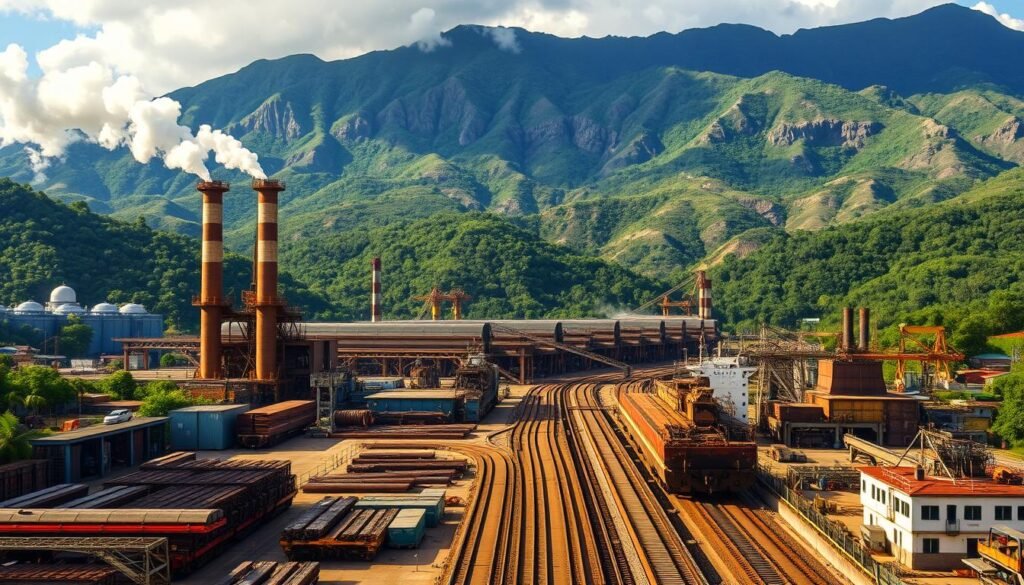
A key component of Guinea’s value addition strategy is the development of pellet plant facilities. Iron ore pellets are a highly sought-after product in the steel industry, offering improved quality and efficiency for steel production. The planned pellet plants will enable Guinea to tap into this lucrative market, increasing the value of its iron ore exports.
Direct Reduced Iron (DRI) Facilities
In addition to pellet production, Guinea is also planning to develop Direct Reduced Iron (DRI) facilities. DRI is a crucial intermediate product in the steelmaking process, particularly for electric arc furnaces. By producing DRI, Guinea can cater to the growing demand for cleaner steel production methods, particularly in Europe and the US.
Targeting Green Steel Markets in Europe and US
The green steel market is gaining momentum globally, driven by environmental regulations and consumer demand for sustainable products. Guinea’s value-added iron ore products, such as DRI, are well-positioned to capitalize on this trend. By targeting green steel markets in Europe and the US, Guinea can secure premium prices for its products and establish long-term trade relationships.
The successful implementation of Guinea’s value addition strategy will not only boost the country’s economy but also contribute to the global transition towards more sustainable steel production practices.
Guinea vs. Liberia: The Strategic Port Competition
As Guinea develops its Simandou iron ore project, the strategic competition with Liberia over port infrastructure is becoming increasingly significant. The Simandou project, being one of the world’s largest untapped iron ore reserves, positions Guinea as a potential major player in the global iron ore market.
The competition between Guinea and Liberia centers around their respective port infrastructure capabilities and plans. While Liberia has existing port facilities that could potentially serve as an export route for Guinean iron ore, Guinea is determined to develop its own deep-water port to maintain control over its mineral resources.
Liberia’s Alternative Export Route
Liberia’s port infrastructure presents an alternative export route for iron ore from the region. However, relying on Liberian ports could undermine Guinea’s sovereignty over its mineral resources.
Sovereignty and Control of Mineral Resources
Guinea’s decision to develop its own port infrastructure is driven by the need to maintain sovereignty and control over its mineral resources. By having its own deep-water port, Guinea can ensure that it has complete control over the export of its iron ore, thereby safeguarding its economic interests.
Long-term Regional Economic Dominance
The development of Guinea’s port infrastructure is crucial for its long-term regional economic dominance. By controlling its own export routes, Guinea can dictate the terms of iron ore exports in the region, potentially giving it a competitive edge over Liberia.
Why Sharing Diminishes Guinea’s Strategic Position
Sharing its export infrastructure with Liberia or relying on Liberian ports could diminish Guinea’s strategic position in the region. By maintaining control over its own infrastructure, Guinea can protect its economic interests and ensure that it remains a major player in the global iron ore market.
| Country | Port Infrastructure | Iron Ore Export Capacity |
|---|---|---|
| Guinea | Developing deep-water port | Potential to be a major exporter |
| Liberia | Existing port facilities | Capacity to handle regional exports |
The strategic competition between Guinea and Liberia highlights the importance of port infrastructure in the iron ore export market. Guinea’s determination to develop its own deep-water port underscores its commitment to maintaining sovereignty and control over its mineral resources.
Conclusion: Securing Guinea’s Economic Future
Guinea’s determination to maintain control over the Simandou iron ore project and its associated infrastructure is driven by the potential for significant economic benefits. The development of simandou deep-water port jobs is expected to be a major driver of employment and economic growth.
A key aspect of this strategy is the implementation of a guinean value addition strategy, which aims to move beyond raw ore exports and develop a more diversified economy. By investing in pellet plant development and Direct Reduced Iron (DRI) facilities, Guinea can capitalize on the growing demand for green steel in Europe and the US.
By maintaining sovereignty over its mineral resources and controlling the export infrastructure, Guinea can ensure long-term regional economic dominance. This approach will not only secure Guinea’s economic future but also create new opportunities for economic transformation and growth.