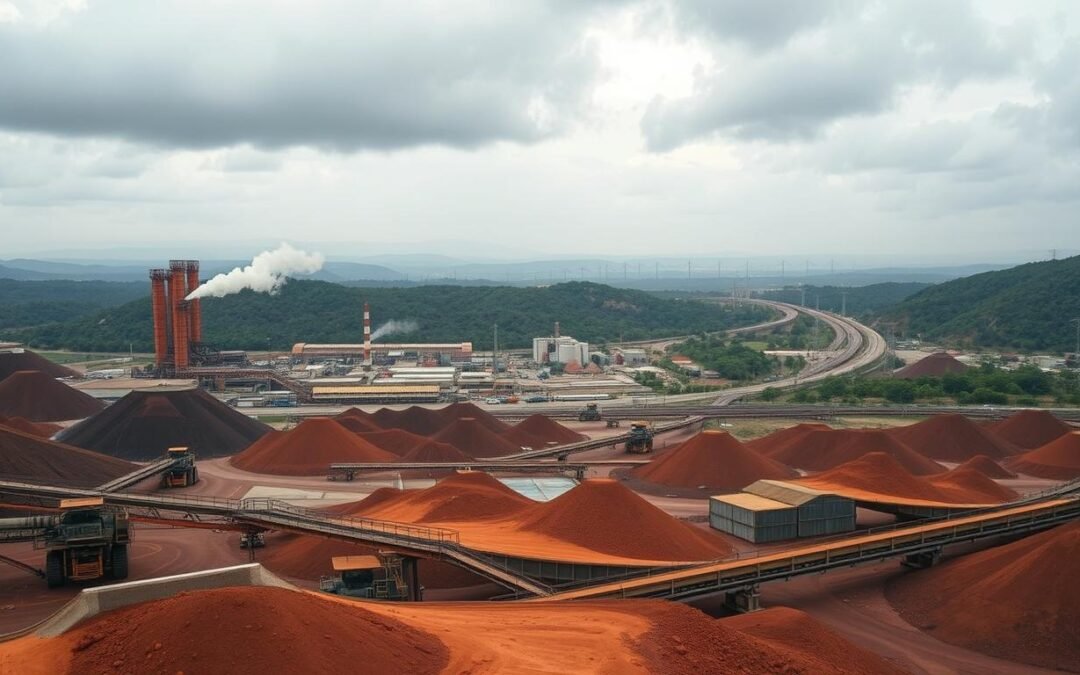
Guinea’s decision to invest a staggering $20 billion in the Simandou iron ore project has raised eyebrows. The project’s scale is massive, involving not just the extraction of iron ore, but also the development of extensive infrastructure, including a railway line over 600 km long and a deep-water port.
The question on everyone’s mind is: why opt for such an expensive route when there’s a possibility of shipping ore through Liberia using the Liberia iron ore corridor?
Understanding the rationale behind this massive investment is crucial, especially considering the complexity of the Simandou project and its potential impact on Guinean iron ore exports.
Key Takeaways
- The Simandou iron ore project is a massive undertaking involving a mine, railway, and deep-water port.
- The project’s scale and complexity justify the significant investment.
- Alternative routes, such as the Liberia iron ore corridor, were considered.
- The decision to invest in the Simandou project has implications for Guinean iron ore exports.
- The project’s infrastructure will significantly impact the region.
The Simandou Project: Guinea’s $20 Billion Gamble
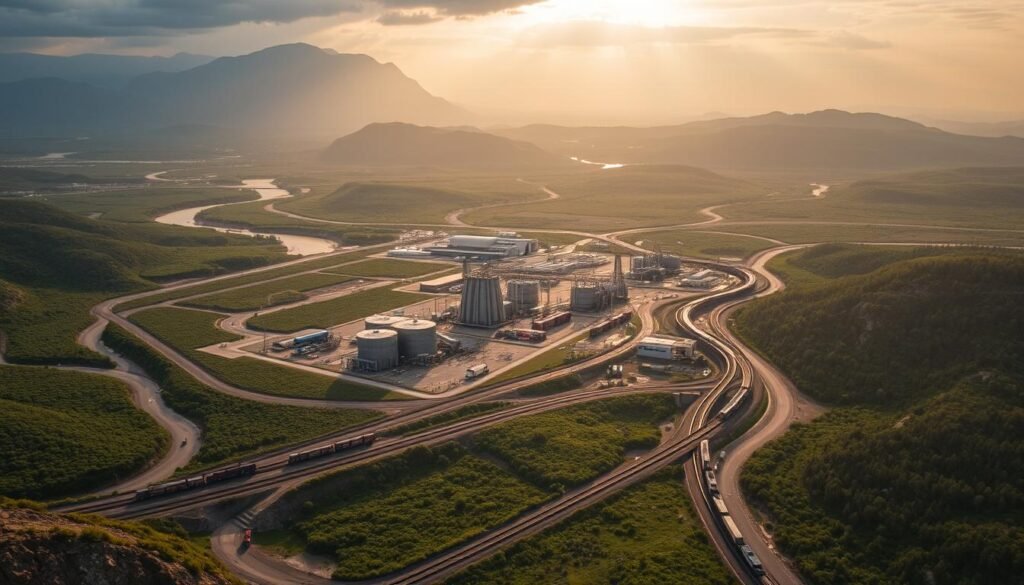
At the heart of Guinea’s mining ambitions is the Simandou project, a $20 billion behemoth that could reshape the country’s economy. The Simandou iron ore project is not just another mining operation; it’s an integrated mega-project that includes a mine, a railway spanning over 600 kilometers, and a deep-water port.
The World’s Largest Untapped Iron Ore Reserve
The Simandou project is recognized as the world’s largest untapped iron ore reserve, holding significant potential for Guinea’s economic growth. Iron ore is a critical component in steel production, and with global demand on the rise, the Simandou project is poised to play a crucial role in the global supply chain.
The project’s significance extends beyond its size; it’s also a testament to Guinea’s rich mineral resources and its potential to become a major player in the global mining industry.
Components of the Mega-Project: Mine, 600km Railway, and Deep-Water Port
The Simandou project is a complex infrastructure development that encompasses several key components:
- A mine that will extract high-grade iron ore
- A 600km railway to transport the ore across the country
- A deep-water port in Guinea to facilitate international shipping
The construction of the $20 billion trans-Guinean railway is a monumental task, requiring significant investment and technological expertise. The railway will not only enable the transportation of iron ore but also potentially open up other parts of the country to economic development.
The deep-water port, a critical component of the project, will allow for the efficient export of iron ore to global markets, further integrating Guinea into the global economy.
The Simandou project’s scale and complexity underscore the challenges and opportunities associated with large-scale mining operations in West Africa. Effective logistics, including the railway and port, are crucial for the project’s success and will have a lasting impact on West Africa mining logistics.
Economic Logic Behind Guinea’s Infrastructure Investment
Guinea’s decision to invest $20 billion in the Simandou project is rooted in a strategic economic logic that aims to transform the country’s mining sector. This massive infrastructure investment is not just about extracting iron ore; it’s about creating a sustainable and controlled environment for Guinean iron ore exports.
The project’s scope includes developing a mine, a 600km railway, and a deep-water port, which together form the backbone of Guinea’s plan to internalize the value chain. By controlling the entire production and transportation process, Guinea aims to maximize its revenue from iron ore exports.
Internalizing the Value Chain: The Long-Term Vision
Internalizing the value chain is a critical component of Guinea’s long-term economic strategy. By owning and operating the infrastructure necessary for iron ore extraction and transportation, Guinea can reduce its dependence on foreign entities and keep a larger share of the profits generated by its natural resources.
This approach also enables Guinea to have greater control over the environmental and social impacts of the mining operations, potentially improving the sustainability of the project.
Cost Recovery Requirements for a $20 Billion Public Investment
Recovering the costs of such a massive investment requires a well-planned strategy. The $20 billion trans-Guinean railway is a significant component of this investment, and its cost recovery will be crucial to the project’s overall financial viability.
| Cost Component | Estimated Cost ($ Billion) | Projected Revenue Stream |
|---|---|---|
| Mine Development | 8 | Iron Ore Exports |
| 600km Railway | 10 | Railway Transit Fees |
| Deep-Water Port | 2 | Port Handling Charges |
Effective cost recovery will depend on efficient operations, competitive pricing, and a stable political environment. By achieving these goals, Guinea can ensure that its investment in the Simandou project yields substantial economic benefits.
The Liberia Iron Ore Corridor as an Alternative Route
The Liberia iron ore corridor presents a viable alternative for Guinea’s iron ore exports, potentially revolutionizing the region’s mining industry. This alternative route could significantly impact the logistics and economics of iron ore transportation from Guinea.
Existing Infrastructure: The Nimba-Buchanan Railway
The Nimba-Buchanan Railway in Liberia is a crucial piece of existing infrastructure that could support the Liberia iron ore corridor. Originally built for iron ore transportation, this railway connects the Nimba mine to the port city of Buchanan. Upgrading and utilizing this railway could provide a cost-effective and efficient route for Guinean iron ore exports.
The railway’s capacity and condition are critical factors in determining its suitability for large-scale iron ore transportation. Recent investments in upgrading Liberian infrastructure have improved the railway’s potential for handling significant volumes of iron ore.
HPX Liberty Corridor Proposal for Guinean Exports
HPX, a leading mining company, has proposed the Liberty Corridor as a new infrastructure project to facilitate Guinean iron ore exports through Liberia. This ambitious project involves developing a new railway and upgrading the existing port facilities in Buchanan. The Liberty Corridor aims to create a seamless and efficient transportation network for Guinean iron ore, potentially reducing costs and increasing competitiveness in the global market.
Comparative Logistics: Trans-Guinean vs. Liberian Routes
Comparing the Trans-Guinean railway with the Liberian route reveals several key differences in logistics and economics. The Liberian route, utilizing the Nimba-Buchanan Railway and potentially the HPX Liberty Corridor, may offer lower construction costs and shorter transportation distances compared to building a new railway through Guinea.
| Route | Distance | Estimated Cost |
|---|---|---|
| Trans-Guinean Railway | 650 km | $15 billion |
| Liberia Iron Ore Corridor | 500 km | $10 billion |
The Liberia iron ore corridor, with its existing infrastructure and proposed upgrades, presents a compelling alternative to the Trans-Guinean railway. As Guinea continues to develop its Simandou project, exploring this option could provide significant economic benefits and enhance the country’s competitiveness in the global iron ore market.
Political and Sovereignty Implications for Guinea
Guinea’s ambitious Simandou project is not just an economic venture; it’s a statement of national sovereignty. The project’s scale and complexity have significant political implications, both domestically and internationally.
The “Bridge to Prosperity” National Narrative
The Simandou project is touted as a “bridge to prosperity” for Guinea, symbolizing the country’s aspirations for economic development and self-determination. This narrative emphasizes the project’s potential to transform Guinea’s economy and improve the living standards of its citizens.
The project’s proponents argue that it will create jobs, stimulate local economies, and generate significant revenue for the government. By framing the project in this light, the Guinean government aims to garner national support and legitimacy for its ambitious plans.
International Partnerships and Foreign Influence
The Simandou project involves significant international partnerships, with foreign companies and investors playing a crucial role in its development. While these partnerships are essential for the project’s success, they also raise concerns about foreign influence and the potential erosion of Guinea’s sovereignty.
The Guinean government must balance its need for foreign investment with the need to maintain control over its natural resources. This delicate balance is critical to ensuring that the project benefits Guinea and its people, rather than just foreign interests.
In conclusion, the Simandou project’s political and sovereignty implications are complex and multifaceted. As Guinea navigates these challenges, it must remain committed to its national narrative of prosperity and self-determination, while also being mindful of the risks associated with international partnerships and foreign influence.
Conclusion: Balancing Economics and Sovereignty in West African Mining
Guinea’s $20 billion investment in the Simandou iron ore project highlights the complex interplay between economic logic and sovereignty in West African mining. The decision to develop a 600km railway and deep-water port underscores the country’s long-term vision to internalize the value chain and maximize revenue from its vast iron ore reserves.
The Liberia iron ore corridor presents an alternative route for Guinean exports, leveraging existing infrastructure such as the Nimba-Buchanan Railway. However, the choice between the Liberian route and the trans-Guinean route involves critical considerations of guinea rail sovereignty and logistics efficiency in west africa mining.
As Guinea navigates the intricacies of the simandou iron ore project, it must balance economic pragmatism with national sovereignty. The “Bridge to Prosperity” national narrative encapsulates the government’s ambition to harness the project’s potential while maintaining control over the country’s rich natural resources.
Ultimately, the success of the Simandou project will depend on Guinea’s ability to manage the complex dynamics of international partnerships, logistics, and sovereignty. The liberia iron ore corridor and other regional infrastructure initiatives will play a crucial role in shaping the future of west africa mining logistics.