
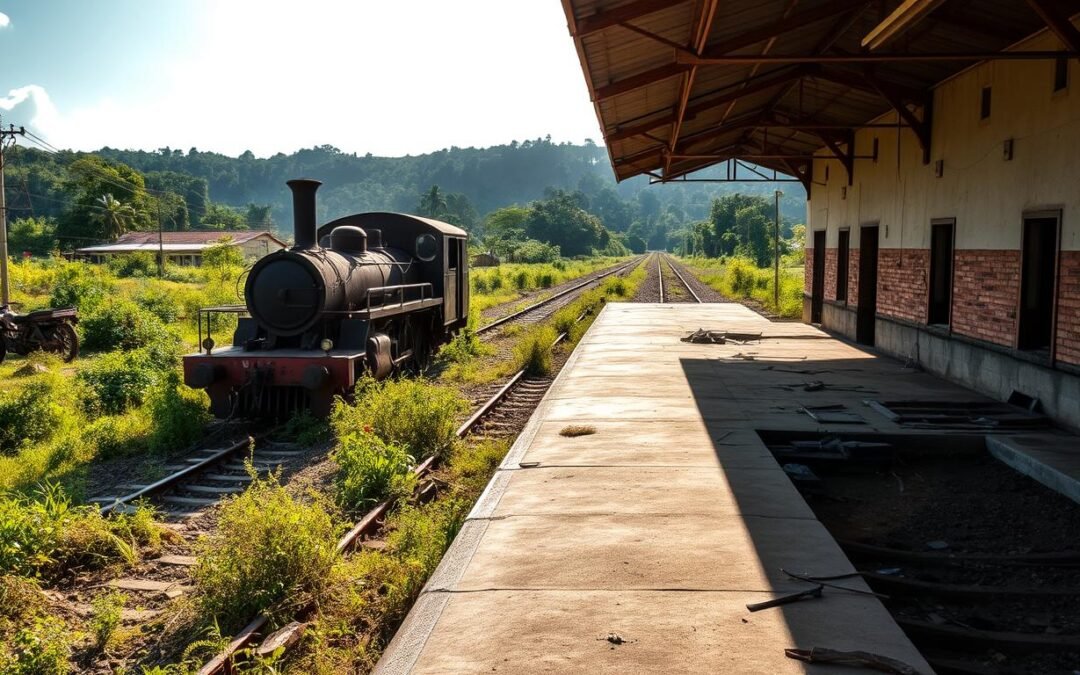
As Guinea’s railway nears completion, the role of Liberia in transporting Nimba ore has come under scrutiny.
The assumption that Guinean ore will continue to flow through Liberia in massive volumes after the Trans-Guinean line is operational is being questioned.
This raises important considerations about the future of Liberia’s railway and its capacity to handle such tonnage.
Understanding the dynamics at play is crucial for assessing the potential risks and opportunities associated with Liberia’s role in regional ore transportation.
Key Takeaways
- The completion of Guinea’s railway may impact Liberia’s role in transporting Guinean ore.
- The assumption of endless Guinean tonnage for Liberia’s rail is being reevaluated.
- Liberia’s railway capacity and its future utilization are critical considerations.
- The dynamics of regional ore transportation are complex and multifaceted.
- Assessing the risks and opportunities is essential for stakeholders.
Understanding HPX Liberia Rail Access Arrangements
Delving into HPX’s rail access arrangements in Liberia provides insight into the company’s operational plans and strategic decisions. The Nimba Iron Ore Project, a significant undertaking by HPX, is central to these arrangements.
The Nimba Iron Ore Project Background
The Nimba Iron Ore Project is a major iron ore mining operation located in Nimba County, Liberia. HPX has been actively developing this project, which holds substantial iron ore reserves. The project’s progression is closely tied to the rail infrastructure that will transport the ore to ports for export.
HPX’s Current Stockpiles and Production Plans
HPX has been stockpiling iron ore at Nimba, awaiting transportation to the port. The company’s production plans are geared towards ramping up output, with the rail link playing a critical role in this strategy. Effective rail access is crucial for HPX to meet its production targets and maintain operational efficiency.
Proposed Cross-Border Transportation Framework
A key aspect of HPX’s strategy involves a proposed cross-border transportation framework, which includes the development of the Liberty Corridor. This framework aims to facilitate the efficient movement of iron ore from Nimba through Liberia to the port.
The Liberty Corridor Concept
The Liberty Corridor concept is an integral part of HPX’s transportation plan, envisaging a rail corridor that enhances the connectivity between Nimba and the Liberian port. This concept is seen as a vital component in optimizing the logistics and reducing transportation costs. Critics, however, have raised concerns about the feasibility and potential challenges associated with the Liberty Corridor, including the ivanhoe liberia deal specifics and the critique of the liberty corridor.
As HPX navigates the complexities of rail access and transportation, the success of the Nimba Iron Ore Project hangs in the balance. The company’s ability to effectively utilize the rail network will be pivotal in determining the project’s overall success and the impact on the regional iron ore trucking industry.
Temporary Convenience vs. Long-Term Strategy
As Liberia considers the potential benefits of allowing Guinean ore to transit through its territory, it’s crucial to weigh the temporary advantages against the long-term strategic implications. The arrangement with HPX to use Liberia’s rail infrastructure for Guinean ore transportation presents a complex scenario that requires careful analysis.
HPX’s Short-Term Transit Needs
HPX’s immediate requirement is to transport Guinean ore through Liberia’s rail network to facilitate initial shipments. This short-term need is driven by the urgency to expedite ore exports and capitalize on current market demands.
Expediting Initial Ore Shipments
The primary focus for HPX is to overcome the current logistical challenges and ensure the timely transportation of ore. Key aspects include:
- Utilizing existing rail infrastructure to its maximum capacity
- Streamlining logistical processes to reduce transit times
- Coordinating with relevant stakeholders to address potential bottlenecks
Guinea’s Advancing Railway Timeline
Meanwhile, Guinea is making significant progress on its railway infrastructure, particularly with the Simandou project. The development of this railway is poised to revolutionize the transportation of Guinean ore, potentially reducing reliance on Liberia’s rail network.
Simandou Infrastructure Development Progress
The Simandou railway project is advancing rapidly, with several key milestones already achieved. This progress indicates that Guinea is on track to complete its railway infrastructure, which could have significant implications for Liberia’s role in Guinean ore transportation.
As Guinea’s railway nears completion, HPX’s reliance on Liberia’s rail infrastructure may be temporary. This raises important questions about Liberia’s long-term strategy and how it can benefit from the situation.
The key takeaway is that while Liberia may enjoy temporary economic benefits from hosting Guinean ore transit, its long-term strategy should focus on sustainable development that isn’t solely dependent on transient ore transportation.
Guinea’s National Resource Integration Vision
Guinea is embarking on an ambitious path to fully integrate its vast mineral resources within its national borders. This strategic move is driven by a desire to maximize the economic benefits derived from its rich iron ore deposits. By developing a comprehensive infrastructure framework, Guinea aims to strengthen its position in the global mining industry.
The Multi-Billion Dollar Railway Investment
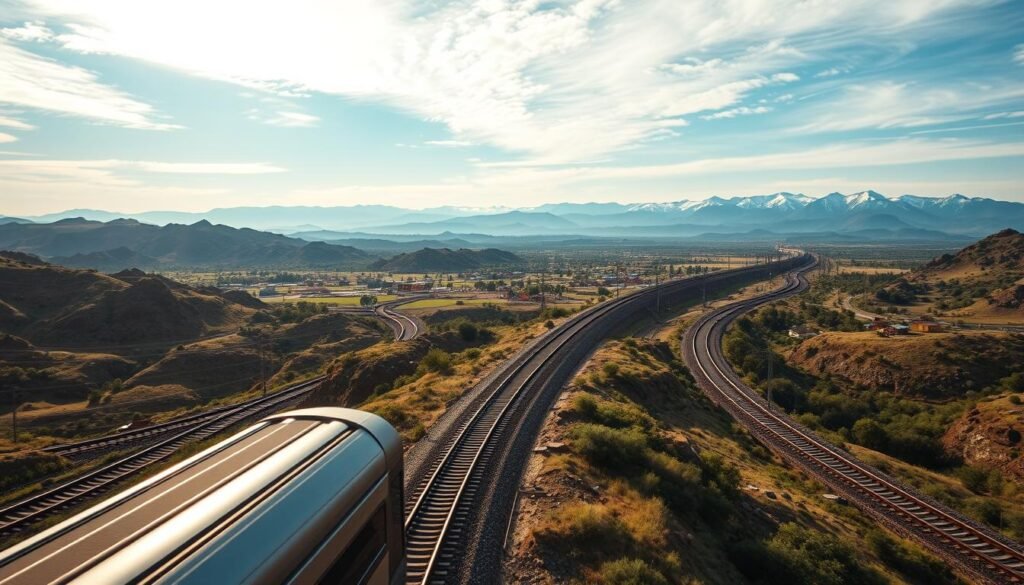
A cornerstone of Guinea’s integration vision is the development of a multi-billion dollar railway system. This infrastructure project is designed to facilitate the efficient transportation of iron ore from mining sites to ports, both for domestic processing and export.
Economic Benefits of Domestic Infrastructure
The railway investment is expected to yield significant economic benefits, including job creation and stimulation of local economies. By enhancing transportation infrastructure, Guinea can reduce logistics costs and increase the competitiveness of its iron ore exports.
- Job creation in construction and maintenance sectors
- Stimulated economic activity in local communities
- Improved logistics efficiency
Strategic Control of Mineral Supply Chains
Guinea’s resource integration vision also encompasses the strategic control of mineral supply chains. By maintaining control over its supply chains, Guinea can ensure the long-term sustainability of its mining industry and maximize revenue.
Guinea’s Resource Sovereignty Objectives
Guinea’s efforts to control its mineral supply chains are part of a broader strategy to assert its resource sovereignty. This involves not only infrastructure development but also regulatory measures to ensure that the country’s mineral wealth benefits its citizens.
| Supply Chain Component | Guinea’s Control Measures | Expected Outcomes |
|---|---|---|
| Mining Operations | Regulatory oversight and partnership with local stakeholders | Increased revenue and job creation |
| Transportation Infrastructure | Investment in railway and port facilities | Improved logistics efficiency and reduced costs |
| Export Processes | State-controlled export terminals and pricing mechanisms | Maximized revenue and market competitiveness |
Capacity Constraints and Competing Priorities
With the HPX Liberia rail access deal on the horizon, the limitations of Liberia’s current rail and port infrastructure are under scrutiny. The agreement, while promising for the region’s mining sector, raises critical questions about the capacity of Buchanan Port and the rail corridor to handle additional demands.
Buchanan Port and Rail Corridor Limitations
The Buchanan Port and its connected rail corridor are crucial for Liberia’s mining exports. However, they face significant technical and logistical challenges.
Technical and Logistical Bottlenecks
The existing infrastructure suffers from limited capacity and outdated technology, hindering efficient transportation. Key issues include:
- Insufficient rail track maintenance
- Inadequate port handling facilities
- Limited rolling stock availability
These bottlenecks not only affect the current operations but also pose a significant challenge to accommodating the increased demand anticipated from the HPX Liberia rail access deal.
ArcelorMittal’s Existing Rights and Expansion Plans
ArcelorMittal, a major player in Liberia’s mining sector, has existing rights and expansion plans that could potentially conflict with the HPX Liberia rail access agreement.
Potential Conflicts with Liberian Mining Projects
The introduction of the HPX Liberia rail access deal into an already complex operational landscape may lead to competing priorities among mining companies. ArcelorMittal’s established presence and future plans could clash with the new demands, necessitating a careful balancing act to ensure that all stakeholders’ needs are met.
The situation underscores the need for a comprehensive infrastructure development plan that addresses the current limitations and anticipates future demands. By doing so, Liberia can maximize the benefits of the HPX Liberia rail access deal while ensuring the smooth operation of existing mining projects.
Conclusion: Balancing Opportunity with Realistic Expectations
Liberia’s rail access arrangements are at a critical juncture, with the prospect of Guinean ore transit presenting both opportunities and challenges. A liberty corridor critique reveals that relying heavily on Guinean tonnage may not align with Guinea’s long-term strategy, potentially creating diplomatic tension.
The Simandou railway completion is a significant factor in this context, as it may alter the dynamics of Guinean ore through Liberia. It is essential for Liberia to balance its aspirations with realistic expectations, considering the capacity constraints and competing priorities in the region.
By adopting a cautious and informed approach, Liberia can navigate the complexities of regional transportation infrastructure, ensuring that its interests are protected while fostering cooperation with neighboring countries.