
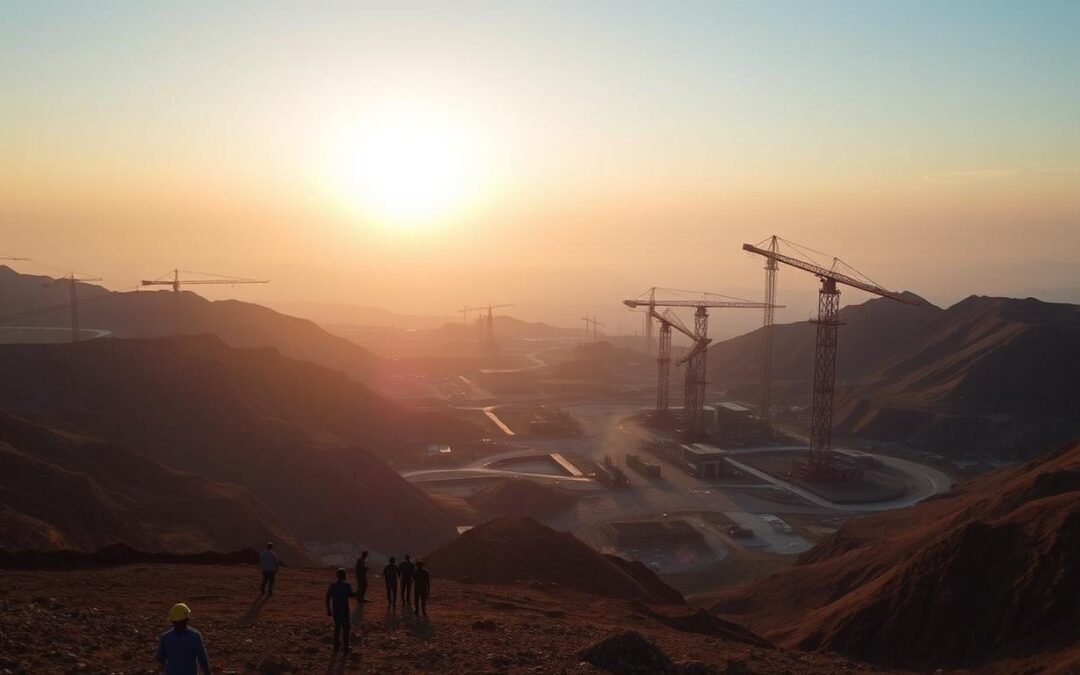
Liberia’s strategic planning is at a critical juncture, particularly regarding its role in Guinean ore transit. The country’s future depends on making informed decisions that prioritize its own mining projects and ensure fair multi-user access.
Wishful thinking is not a strategy. Liberia must adopt a realistic approach to negotiating transit volumes from Guinea, focusing on its own development rather than relying on another country’s ore and politics.
A well-crafted liberia rail policy is crucial for maximizing the benefits of Guinean ore transit while safeguarding Liberia’s interests. This involves careful planning and negotiation to ensure that the country’s infrastructure is utilized effectively.
Key Takeaways
- Liberia must prioritize its own mining projects.
- A realistic approach is necessary for negotiating transit volumes.
- Fair multi-user access is crucial for Liberia’s development.
- A well-planned rail policy can maximize benefits.
- Liberia should focus on its own development, not just Guinean ore transit.
The Reality Check: Guinea’s Shifting Export Landscape
The Guinean government’s focus on self-sufficiency is reshaping the country’s ore export dynamics. This strategic shift is primarily driven by massive investments in infrastructure, particularly the Simandou iron ore project and the Trans-Guinean railway.
Simandou Production Timeline and Capacity
The Simandou project is a cornerstone of Guinea’s mining expansion. With a production capacity expected to ramp up significantly over the next few years, it is poised to become one of the largest iron ore mines globally. Key aspects include:
- Initial production phase starting with 2 million tons per annum
- Expected ramp-up to 50 million tons per annum within 5 years
- State-of-the-art mining technology to ensure efficiency
The $20 Billion Trans-Guinean Railway Investment
A critical component of Guinea’s infrastructure development is the $20 billion Trans-Guinean railway. This project aims to connect the Simandou mine to the coast, facilitating the transport of iron ore. The railway will:
- Enhance the efficiency of ore transport
- Reduce transportation costs significantly
- Open up new economic opportunities along the railway route
Guinea’s Strategic Pivot Toward Self-Sufficiency
Guinea’s push for self-sufficiency involves not just expanding its mining capacity but also developing its own processing and manufacturing capabilities. This pivot is expected to:
- Increase the value-added products from Guinean ore
- Reduce dependency on foreign markets for processed goods
- Create new employment opportunities within the country
As Guinea advances its massive railway project, expectations of exporting large volumes via Liberia are fading. This reality check necessitates a reevaluation of Liberia’s strategy regarding Guinean ore transit.
Analyzing the HPX Ivanhoe Liberia Agreement
A critical examination of the HPX Ivanhoe Liberia agreement reveals both opportunities and challenges for Liberia’s economy. The agreement is centered around the development of cross-border infrastructure, which is expected to have a significant impact on the region.
Terms and Expectations for Cross-Border Infrastructure
The agreement outlines the terms for the construction and operation of infrastructure that will facilitate the transportation of iron ore from Guinea through Liberia. This includes the development of rail networks and port facilities.
The expectations are high, with projections suggesting that this infrastructure will not only enhance Liberia’s economy but also position it as a critical player in the regional mining industry.
Projected Economic Benefits for Liberia
The economic benefits for Liberia are multifaceted. The agreement is expected to generate significant revenue through transit fees and create employment opportunities in the construction and operational phases.
Moreover, the development of infrastructure is likely to stimulate local economies and attract further investment into the region.
Critical Assessment of Long-Term Viability
A critical assessment of the agreement’s long-term viability involves examining the transit volume projections and revenue implications.
Transit Volume Projections
Transit volume projections indicate a substantial increase in the amount of iron ore transported through Liberia. This is expected to have a direct positive impact on the country’s revenue.
Revenue Implications
The revenue implications are significant, with estimates suggesting that the transit fees could contribute substantially to Liberia’s GDP.
To illustrate the potential economic impact, consider the following table:
| Year | Transit Volume (tons) | Revenue ($ millions) |
|---|---|---|
| 2025 | 5 million | 50 |
| 2030 | 10 million | 100 |
| 2035 | 15 million | 150 |
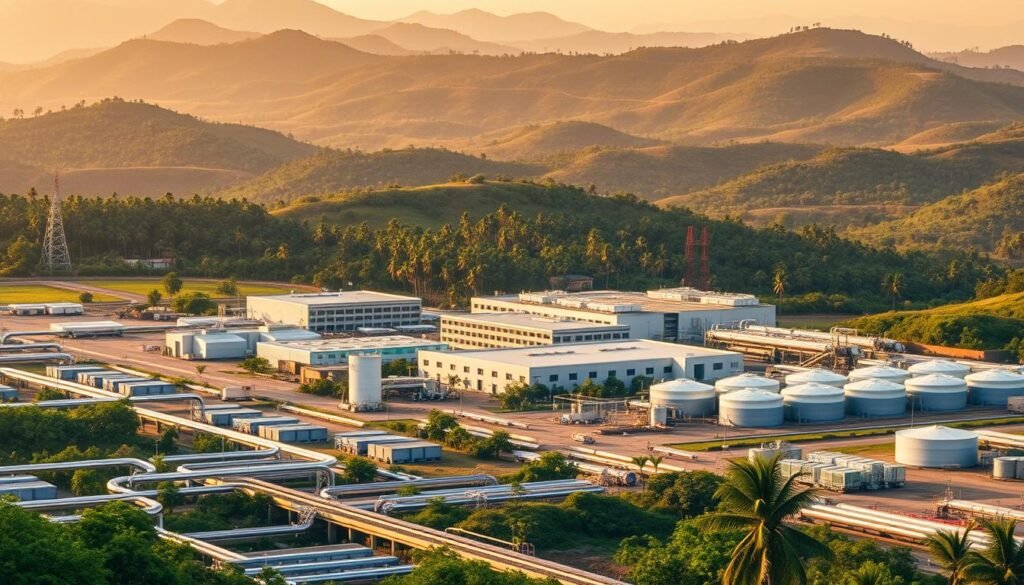
The HPX Ivanhoe Liberia agreement has the potential to transform Liberia’s economy through significant infrastructure development and revenue generation. However, a thorough analysis of its long-term viability is crucial to understanding its true impact.
The Buchanan Port Future: Opportunities and Limitations
With Guinea’s port infrastructure on the rise, the Buchanan Port must navigate a complex landscape to secure its future. The port’s current capacity and expansion plans are crucial factors in determining its competitiveness.
Current Capacity and Expansion Plans
The Buchanan Port currently handles a significant volume of cargo, but its capacity is limited by existing infrastructure. Expansion plans are underway to increase its handling capacity and improve efficiency. These plans include upgrading existing facilities and potentially adding new ones to accommodate growing demand.
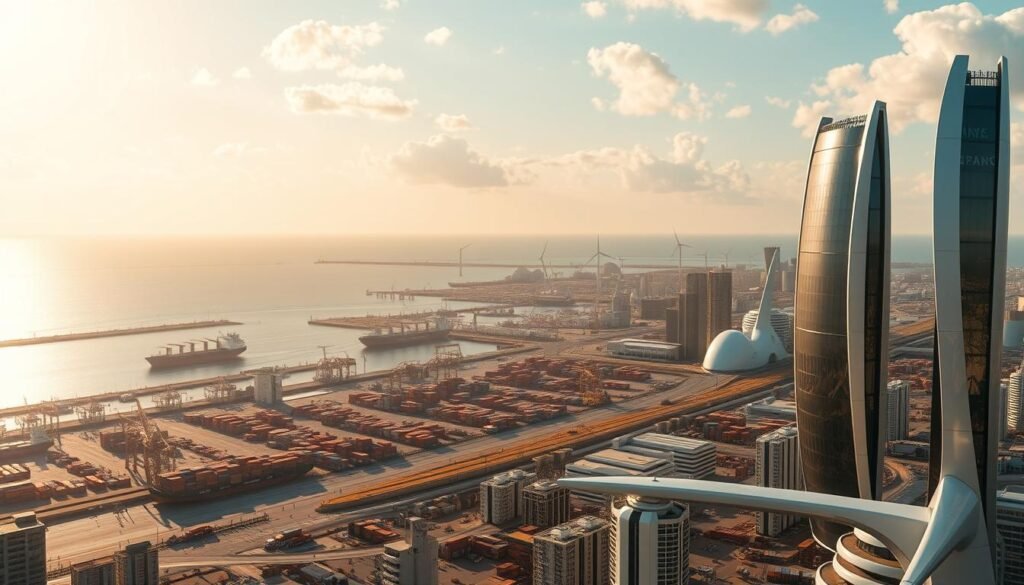
However, the success of these expansion plans depends on various factors, including investment and the ability to compete with emerging ports in Guinea.
Competition with Guinea’s Emerging Port Infrastructure
Guinea’s new port infrastructure poses a significant challenge to the Buchanan Port. The Trans-Guinean Railway and associated ports are designed to handle large volumes of iron ore, potentially diverting traffic away from Liberia.
This competition necessitates a strategic response from the Buchanan Port authorities to remain competitive.
Realistic Expectations for Ore Transit Volumes
Given the developments in Guinea, it’s essential to have realistic expectations about the ore transit volumes that the Buchanan Port can attract. While there are opportunities for the port to handle cargo, the competition from Guinea’s infrastructure means that growth may be limited.
A balanced approach, considering both the opportunities and limitations, is necessary to ensure the future viability of the Buchanan Port.
Liberia’s Domestic Mining Priorities
The future of Liberia’s mining sector hinges on effectively addressing domestic mining priorities. As the country continues to develop its mining industry, it is crucial to focus on both existing operations and new projects.
ArcelorMittal Liberia Rail Access and Expansion
ArcelorMittal Liberia has been a significant player in the country’s mining sector. The company’s rail access and expansion plans are critical for the efficient transportation of iron ore. Improving rail infrastructure will not only enhance the operational efficiency of ArcelorMittal but also potentially benefit other mining operations in the region.
The expansion plans include upgrading existing rail lines and potentially extending the rail network to other mining areas. This could have a positive impact on the overall mining industry in Liberia by reducing transportation costs and increasing competitiveness.
Nimba Iron Ore Liberia Development Potential
Nimba Iron Ore Liberia represents another significant opportunity for domestic mining growth. The development potential of this area is substantial, with high-grade iron ore deposits that are attractive to investors. Effective development of Nimba could lead to increased economic activity and job creation.
The Nimba project is expected to contribute significantly to Liberia’s GDP and provide much-needed revenue for infrastructure development. It is essential to ensure that the development is carried out sustainably and with consideration for environmental and social impacts.
Balancing Foreign and Domestic Mining Interests
Balancing foreign and domestic mining interests is a delicate task. While foreign investment is crucial for bringing in capital and expertise, it is also important to ensure that domestic interests are protected and benefited. Striking the right balance will be key to the long-term success of Liberia’s mining sector.
Employment and Economic Impact
The employment and economic impact of domestic mining projects cannot be overstated. Mining activities provide direct and indirect employment opportunities, contributing to the livelihoods of many Liberians. Moreover, the economic benefits from mining can lead to improved infrastructure and public services.
Infrastructure Development Benefits
Mining projects often drive infrastructure development, including roads, railways, and ports. These improvements can have far-reaching benefits beyond the mining sector, enhancing overall economic development and connectivity.
Here is a summary of the potential benefits of Liberia’s domestic mining priorities:
| Project | Employment Impact | Economic Benefits | Infrastructure Development |
|---|---|---|---|
| ArcelorMittal Liberia | Direct and indirect jobs | Revenue generation | Rail and port upgrades |
| Nimba Iron Ore Liberia | Job creation during construction and operation | GDP contribution | Potential for new rail and road infrastructure |
Developing a Resilient Liberian Mining Strategy
As Liberia navigates its mining future, developing a resilient strategy is crucial for sustainable growth. The country’s mining sector is at a crossroads, with significant opportunities and challenges on the horizon.
The Risks of Guinean Ore Dependency
Liberia’s reliance on Guinean ore poses significant risks, including exposure to cross-border infrastructure politics and potential supply chain disruptions. Guinean ore dependency risk could lead to unforeseen economic consequences, making it essential for Liberia to diversify its mining strategy.
To mitigate these risks, Liberia should focus on developing its domestic mining capabilities, reducing its reliance on Guinean ore. This can be achieved by investing in infrastructure and creating favorable conditions for mining investments.
Creating Fair Multi-User Access Frameworks
A key component of a resilient Liberian mining strategy is the creation of fair multi-user access frameworks. This involves developing infrastructure that can be shared among multiple mining operators, reducing costs and increasing efficiency.
By implementing fair access frameworks, Liberia can promote competition, encourage investment, and ensure that its mining infrastructure is utilized optimally.
Negotiating Transit Agreements as Supplementary Revenue
Liberia can generate supplementary revenue by negotiating transit agreements with neighboring countries, including Guinea. These agreements can provide a significant source of income for Liberia, while also promoting regional cooperation.
Pricing Models and Cost Recovery
When negotiating transit agreements, it is essential to consider pricing models and cost recovery mechanisms. Liberia should adopt a pricing strategy that balances its revenue needs with the need to attract and retain mining operators.
Infrastructure Maintenance Considerations
In addition to pricing models, Liberia must also consider infrastructure maintenance costs when negotiating transit agreements. This includes ensuring that maintenance costs are factored into the pricing structure, to prevent unforeseen expenses and ensure the long-term sustainability of the infrastructure.
By developing a resilient mining strategy, Liberia can reduce its reliance on Guinean ore, promote competition, and generate supplementary revenue through transit agreements. This will help to ensure the long-term sustainability of Liberia’s mining sector.
Conclusion: Prioritizing Sustainable Development Over Wishful Thinking
Liberia’s mining sector requires a pragmatic approach, focusing on sustainable development rather than relying on uncertain Guinean ore transit. The HPX Ivanhoe Liberia agreement presents opportunities, but a realistic assessment of its viability is crucial.
A well-crafted Liberia rail policy and mining strategy are essential for the sector’s growth. Fair multi-user access frameworks and domestic mining projects, such as those involving ArcelorMittal Liberia, should be prioritized.
Negotiating fair transit terms and developing a resilient mining strategy will enable Liberia to maximize its economic benefits. By prioritizing sustainable development, Liberia can create a stable and prosperous mining sector.